For PGME offices
AI-drafted assessments, processed in Canada.
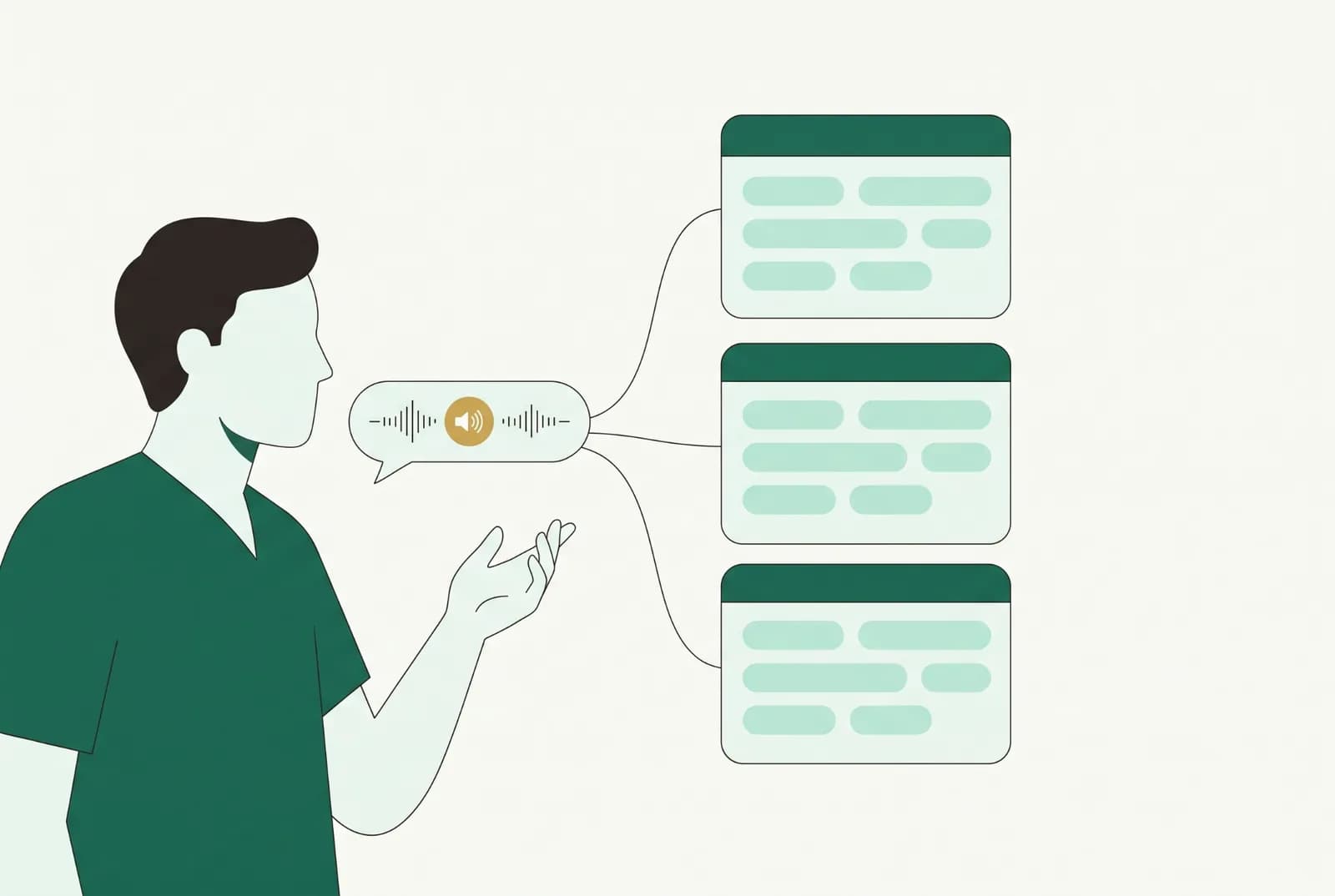
A preceptor talks through the encounter. AI drafts your program’s own assessment form from it, in English or French, and the resident reviews it before it counts. Transcription and the AI model both run in Canada.
- Stored and processed in Canada
- Patient identifiers removed before the draft is written
- No account for preceptors
- English and French
Administrative triage
The work that lands on your office.
None of this is assessment. It is the administrative residue of assessment not having happened at the time, and it scales with every program you are responsible for.
Chasing assessments that were never filed.
The feedback happened. The form did not. Somebody has to work out which of those two is true for each missing record, and the only people who know are the two who had the conversation weeks ago.
Escalations that arrive as a dispute.
By the time a missing assessment reaches your office it is rarely a clerical question. It is a resident who believes they were assessed, a preceptor who believes they gave the feedback, and no record either way.
Reconciling before every committee.
Competence committee preparation turns into an audit of what is missing rather than a reading of what is there, and the reading is the part that was supposed to be the point.
Requests to reopen closed blocks.
A late assessment is an administrative decision someone has to make, document, and defend, for feedback whose specificity has already decayed with the delay.
What changes
The assessment gets written while the conversation is happening.
A resident records the debrief their preceptor is already giving them. The recording is transcribed, patient identifiers are removed, and the result is a draft assessment against the forms the resident selected. The resident reads it, edits it, and signs it off. Nothing is exported until they do.
What that removes from your office is the category, not a percentage of it: an assessment that is drafted at the moment of the conversation is not one that has to be reconstructed from two people’s memories a month later. How much of the escalation load that actually removes is the question a pilot answers.
We publish no accuracy or completion figure, because we have not measured one. A pilot produces the numbers for your own programs, measured against baselines your office supplies. DebriefMD holds no history from before the pilot begins.
Where the data lives
Storage and processing are in Canada.
Recordings, transcripts and assessments are stored and processed on Canadian infrastructure, in the ca-central-1 region. That includes the speech-to-text step and the language model that drafts the assessment. Both run in-region rather than being sent elsewhere and returned.
One flow leaves the country and it carries no patient data: analytics, and only if a visitor opts into it. It is named on the security page rather than left for someone to find.
What we do not do
DebriefMD is one narrow thing.
It turns a conversation that already happened into a draft assessment the resident edits and signs off. That is the whole product. Four things it is not, said here rather than discovered in month three.
Not a curriculum system.
DebriefMD holds no objectives map, no logbook, and no record of what a rotation is supposed to teach. It does not know what your program's curriculum says, and it does not check anything against it.
Not a scheduling system.
It does not know who is on which service, it does not assign anyone to anything, and it sends no reminders about work that has not happened. A resident opens it because they just had a conversation worth keeping.
Not your evaluation system of record.
Your program's record of a trainee stays where it already is. DebriefMD produces a finished document (an Excel file and a PDF), and where that document goes afterwards is your program's decision, not ours.
Works alongside the system you already run.
DebriefMD does not connect to or replace One45, Elentra, MedSIS or any other assessment platform. It produces a reviewed PDF and an Excel file, and your program decides where they go.
Keep your assessment system. Stop losing the feedback.
DebriefMD is not a platform to migrate to. It produces the assessment at the moment of feedback, and once the resident signs it off it exports as a PDF or Excel file that can go wherever your program already keeps assessments. Start with one program and one block.
Buying for a single program? Read the program director page.